
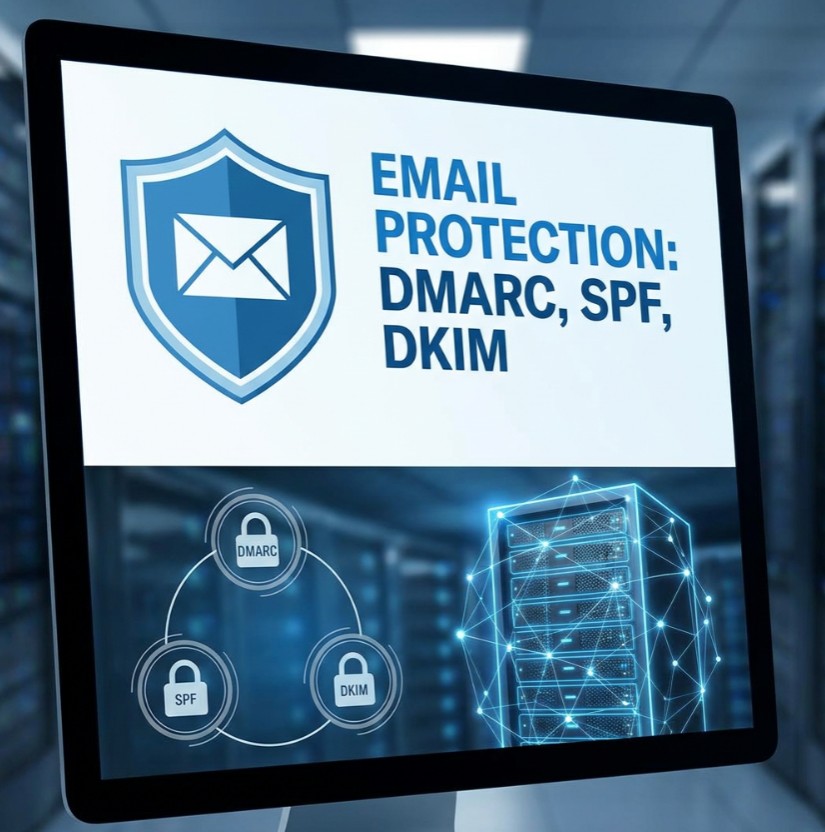
Why Your Business Needs SPF, DKIM, and DMARC Enforcement in 2026
If your company sends invoice notifications, proposal quotes, or routine support emails, your domain reputation is critical to daily operations. Without proper email authentication, spoofers can impersonate your domain, landing your legitimate business communications directly in spam folders—or worse, exposing your clients to phishing attacks.
Implementing SPF, DKIM, and DMARC is no longer optional for small and mid-sized businesses; it is the foundational standard for domain security and deliverability.
The Three Pillars of Email Domain Defense
To protect your organization’s domain integrity, three distinct records must work together within your DNS configuration:
- SPF (Sender Policy Framework): Specifies which mail servers and IP addresses are authorized to send emails on behalf of your domain.
- DKIM (DomainKeys Identified Mail): Adds a cryptographic digital signature to outgoing messages, proving to the recipient’s server that the email was not tampered with in transit.
- DMARC (Domain-based Message Authentication, Reporting, and Conformance): Tells receiving mail servers what action to take if an incoming email fails SPF or DKIM checks.
Understanding DMARC Policy Enforcement
Simply creating a DMARC record with a p=none policy is only an initial monitoring step. True protection occurs when you progress your policy enforcement strategy:
p=none(Monitoring Mode): Gathers telemetry reports from mail providers without altering email delivery.p=quarantine(Soft Enforcement): Directs receiving servers to flag non-compliant emails as spam or junk.p=reject(Full Hardening): Instructs receiving mail servers to drop unauthorized emails entirely, stopping impersonation before it reaches an inbox.
Key Operational Benefits for Your Business
- Prevents Brand Spoofing: Stops cybercriminals from sending fraudulent invoices or phishing attempts using your exact
@yourdomain.comaddress. - Improves Inbox Deliverability: Major email providers (Google Workspace, Microsoft 365, Yahoo) enforce strict authentication guidelines. Proper records ensure your business emails hit the main inbox.
- Visibility into Infrastructure: DMARC aggregate reports provide full visibility into all third-party platforms (CRM, marketing tools, helpdesks) sending emails on your domain’s behalf.
Need Assistance Hardening Your Domain?
Configuring DNS security records incorrectly can cause legitimate business mail to be rejected. Our technical team evaluates your existing DNS records, configures proper SPF/DKIM keys, and guides your DMARC policy safely to full reject enforcement without interrupting business flow.
Ready to secure your domain? Schedule a free domain security review with our team today.
WordPress Post Settings Summary
To ensure this post looks completely integrated when pasted into your editor:
- Title: Why Your Business Needs SPF, DKIM, and DMARC Enforcement in 2026
- Category: Cybersecurity & Domain Security
- Tags: Email Security, DMARC, SPF, DKIM, DNS Hardening, Managed IT
- Author: Soporte ASAP Team (or your public profile name)
- Excerpt: Learn how implementing SPF, DKIM, and DMARC protects your business domain from email spoofing, prevents phishing, and guarantees high inbox deliverability.